About Architectural Lighting
When we say architectural lighting, we mean the decorative exterior fixtures on the building itself: coach and lantern lights, wall sconces, pendants and ceiling lights, post and pier lights, entry fixtures, outdoor fans and similar decorative exterior fixtures.
There is a design reason this is its own service, and the goal is not simply fixture replacement. Many architectural fixtures were selected to illuminate the exterior of a home without any thought of a professionally designed landscape lighting system. Once good landscape lighting is installed, the same fixtures can become too bright, create glare and compete with the overall design.
Depending on the situation, we may replace the fixture, add dimming or control, or simply change the lamp or its output. The objective is always the same: architectural lighting and landscape lighting that work together.
The same applies to commercial buildings. Wall lights, entry fixtures and post lights on restaurants, hotels, retail centers and office buildings can glare at guests or overpower the landscape around them, and they can be brought into balance the same way.
Making the two work together
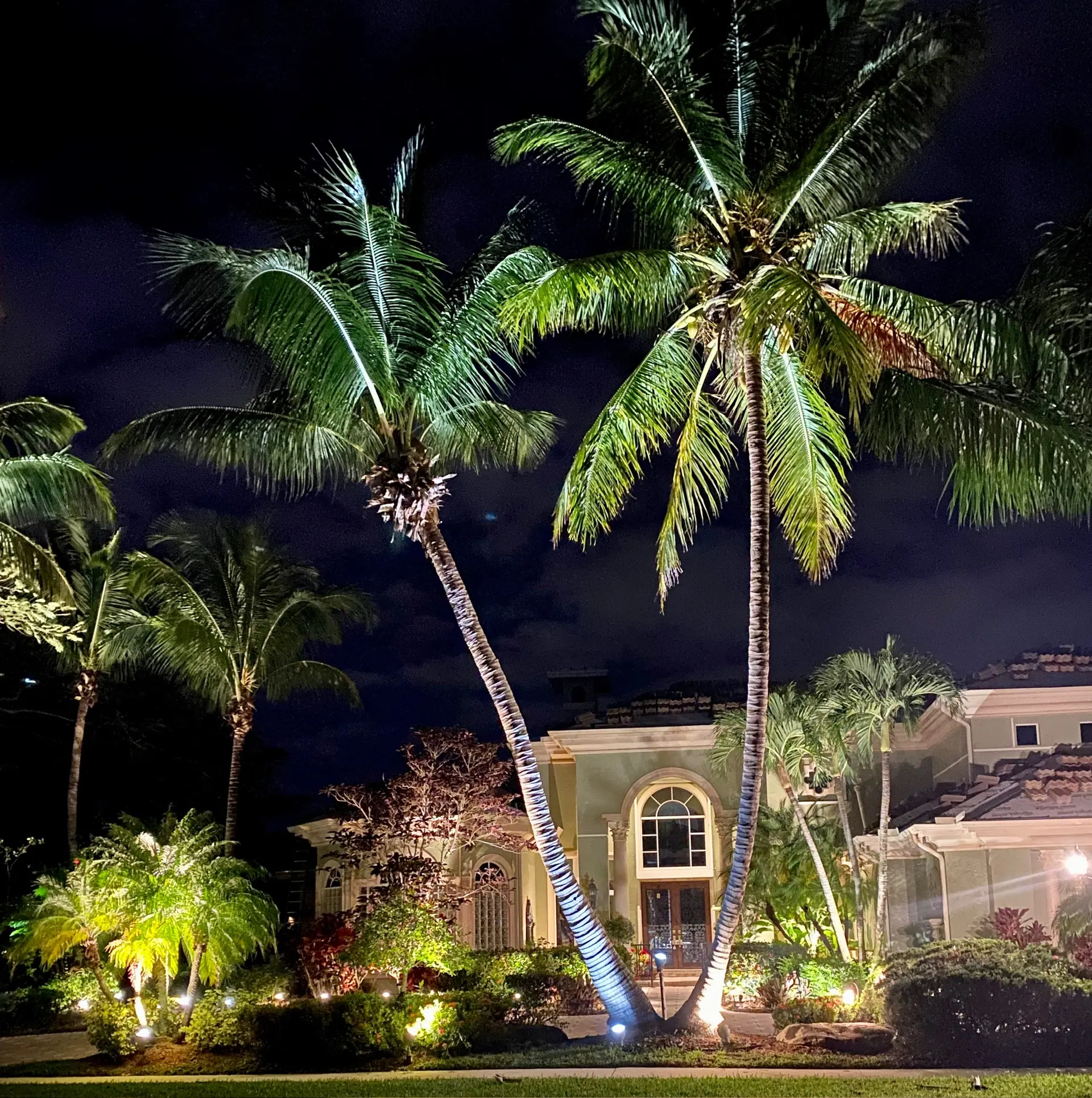
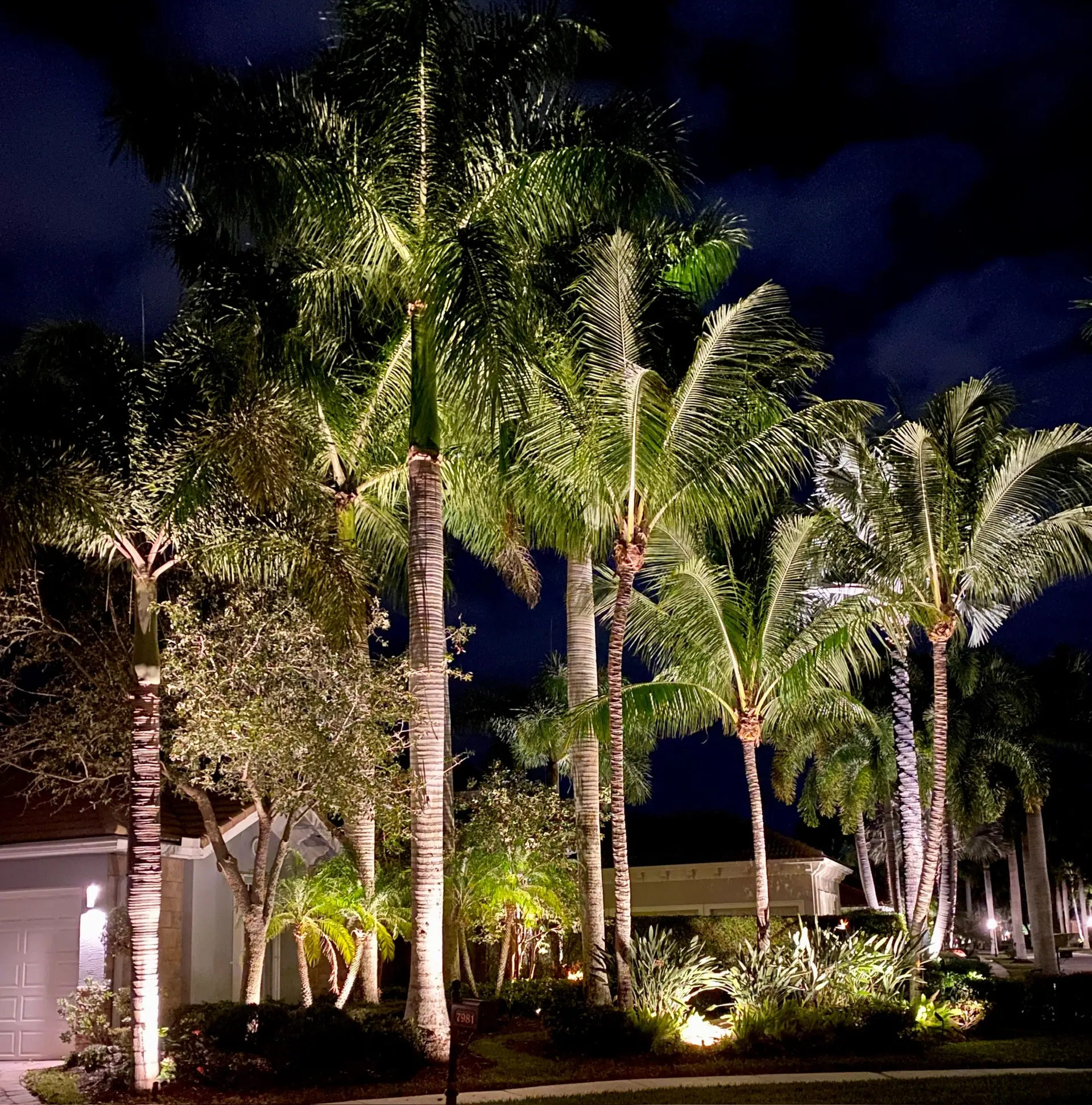
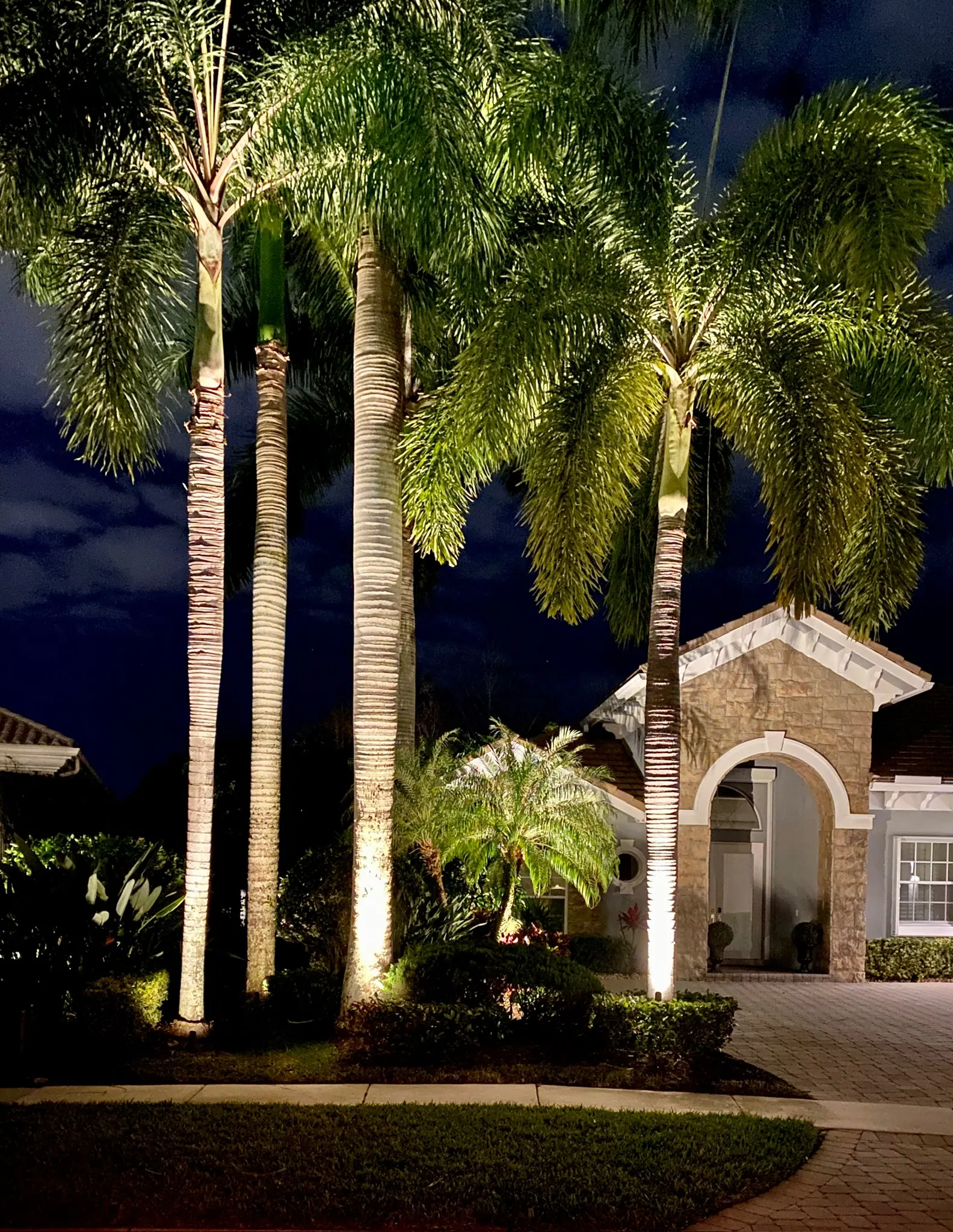
Our objective is for the architectural lighting and the landscape lighting to work together. A lantern beside the front door should glow; it should not be the brightest thing on the property. When it is, the eye goes to the lamp, and the façade, the palms and the garden behind it fall away.
This is the same idea that runs through all of our work: the right amount of light in the right places. Here it usually means less.
What we may recommend
It depends on the fixture, the house and the landscape lighting around it. Often the smallest change is the right one.
A more appropriate lamp
Replacing the lamp with one of a more suitable output and color temperature. Sometimes the homeowner loves the fixture and it simply needs less output.
Dimming and control
Adding dimming or bringing the fixtures onto the same control as the landscape lighting, so levels can be set in relation to one another and changed through the evening.
Replacing the fixture
Where a fixture is corroded, failing, or the wrong scale or style for the house, replacing it with one that suits the architecture, the coastal environment and the landscape lighting design.